Millions of Americans live with atrial fibrillation, a dangerous irregular heartbeat that raises stroke risk. UC San Diego cardiologist and computer scientist Sanjiv Narayan developed mapping software that pinpoints the heart’s hidden trouble spots, making treatment faster and more precise. His breakthrough launched Topera, later acquired by global healthcare company Abbott, and today it helps doctors around the world improve treatment success rates and give patients a better chance at lasting relief.
Areas of Impact
The Future of Health
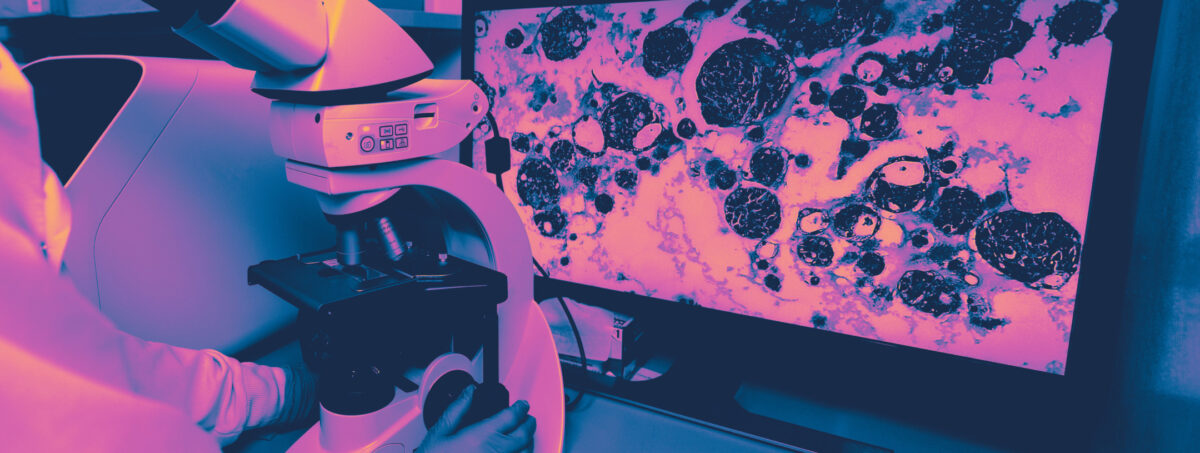
Across UC San Diego, researchers, clinicians and engineers work side by side to understand the biology behind disease and translate breakthroughs into care. It all adds up to earlier detection, more precise treatments and greater chances of preventing the diseases of today and tomorrow.
Our teams study how microbes influence health, develop new ways to spot cancer sooner and map the genetic and environmental factors behind chronic illness.
We’re also leading studies on aging, Alzheimer’s, addiction and mental health, uncovering pathways that lead to more effective prevention and personalized therapies. Innovations range from stem-cell-based models that reveal how organs respond to drugs to AI-driven approaches that help clinicians make faster, more informed decisions.
Our researchers also helped lay the foundation for Cetuximab, a widely used therapy that blocks signals that can drive tumor growth and has helped hundreds of thousands of patients with colon and head and neck cancers.
By connecting discovery with clinical expertise and community partnerships, UC San Diego turns research into real-world results for a healthier, brighter future for you and the people you love.


1,800+
clinical trials supported each year


The Future of Health
Research in Action
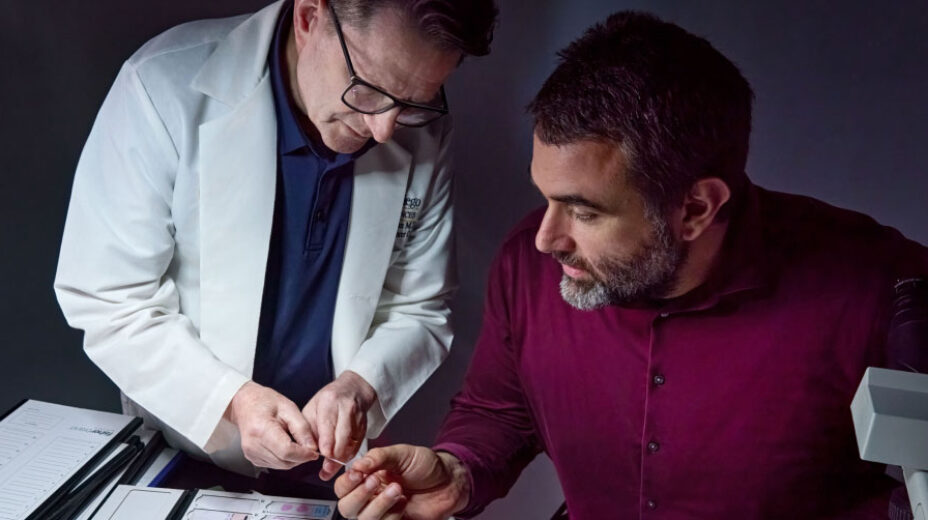
The right cancer care, right now
At UC San Diego, researchers are developing tools that use AI-read biopsies to rapidly identify the best treatment options for certain cancers.
video

The Best Lab is Real Life
The Belmont Village community includes residents in independent living, assisted living and memory care, allowing studies to reflect the full spectrum of aging.
video
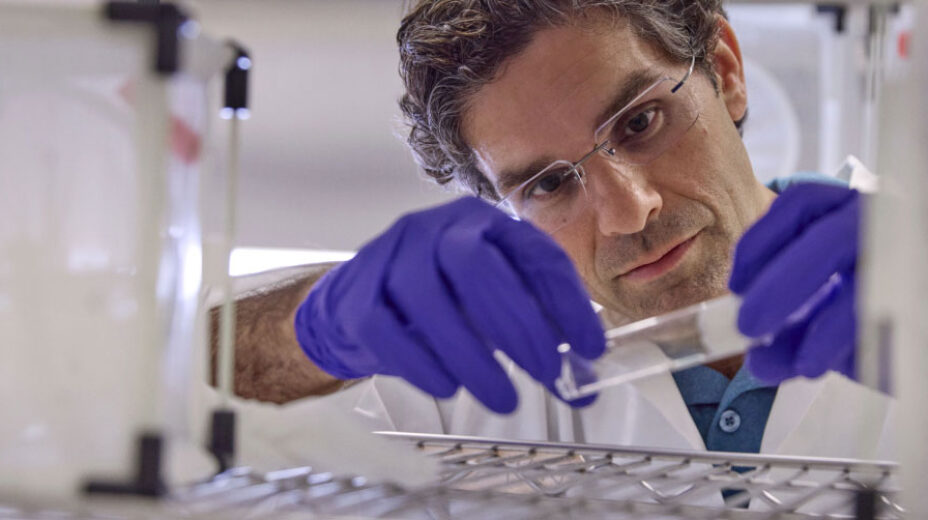
Taking the Bite Out of Mosquito-Borne Disease
Small enough to overlook, mosquitoes spread diseases that disrupt lives and strain communities across the globe.
video
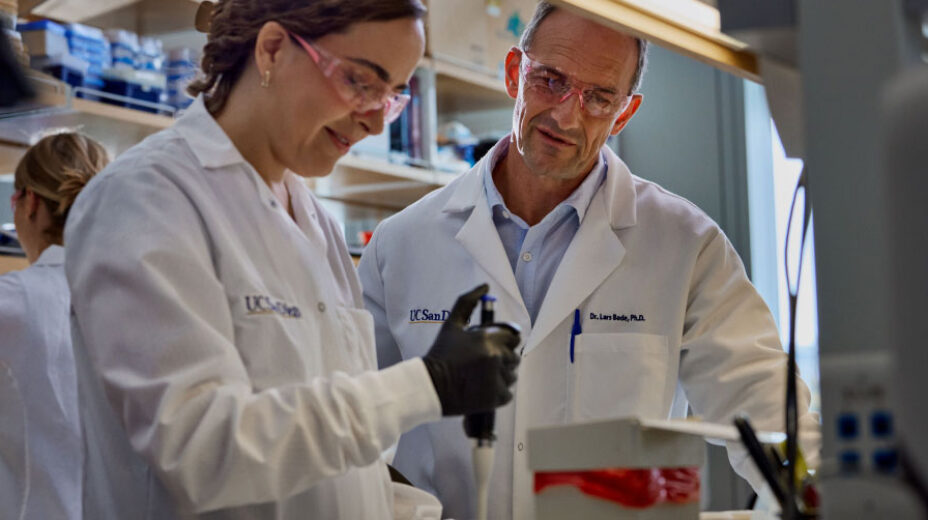
Harnessing the Power of Human Milk
Human milk is a complex, living substance, filled with molecules, antibodies, cells and bacteria that shape early development and long-term health.
video

‘We’re Not a Line Item’—A Patient’s Plea to Protect Research Funding
Now on her third course of chemotherapy, Kimberly Peters understands firsthand the impact of medical research cuts. This time, she’s speaking up.
external-link

AI Enables Rapid Identification of Targeted Cancer Therapy
UC San Diego researchers find that precision treatments for breast and ovarian cancers can start faster with AI-read biopsies.
external-link

Combating Mosquito-Borne Diseases with CRISPR
As alternatives to insecticides, Omar Akbari uses sophisticated genetic engineering methods to solve the world’s mosquito problems.
external-link

Did UC San Diego researchers just help solve global malaria problem?
Mosquitoes are the deadliest animal on Earth. In 2023 alone, they infected 263 million people with malaria, resulting in nearly 600,000 deaths — 80% of them children.
external-link

How an AI program could personalize breast and ovarian cancer care
Researchers at UC San Diego are hoping to drastically shorten the time between a cancer diagnosis and subsequent treatment with their AI platform that identifies biomarkers in breast and ovarian cancer tumors.
external-link

Human milk is essential, yet scientists know little about it. UC San Diego plans to change that
UC San Diego formally inaugurates the Human Milk Institute, the first academic institution in the U.S. devoted to a crucial element of human nutrition that science is, in many ways, only beginning to understand.
external-link

Major Contract Funds Study on Drivers of Resilience Among Older Adults
Anthony J.A. Molina of UC San Diego School of Medicine leads multi-disciplinary project selected to receive funding from Wellcome Leap’s $60 million Dynamic Resilience program.
external-link

Mosquitoes Engineered to Repel Dengue Virus
Researchers develop the first mosquitoes synthetically designed to neutralize many types of the widespread infectious disease.
external-link

New Technology Designed to Genetically Control Disease-spreading Mosquitoes
CRISPR-based system developed to safely restrain mosquito vectors via sterilization.
external-link
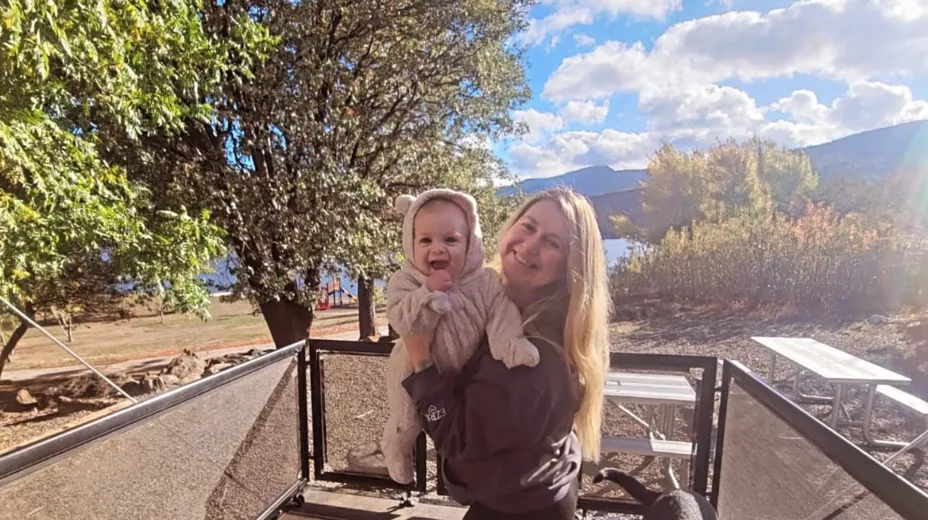
Pumping it Forward: Patient Gives Back to Support Babies
Inspired by her baby’s former experience receiving donor breast milk in the neonatal intensive care unit at UC San Diego Health, mom becomes a milk donor herself.
external-link
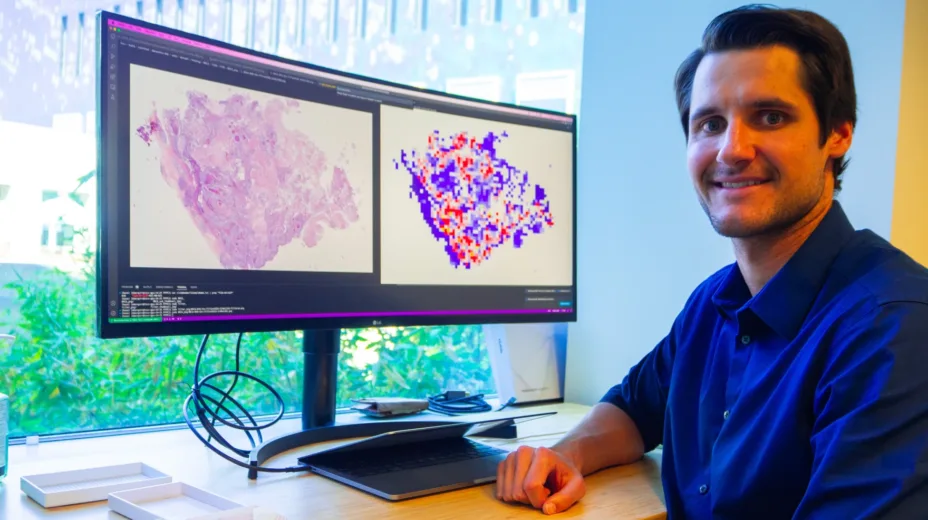
Researchers say using AI speeds up cancer diagnoses
A new AI platform called DeepHRD has been able to spot complex molecular patterns in tissue sample images.
external-link
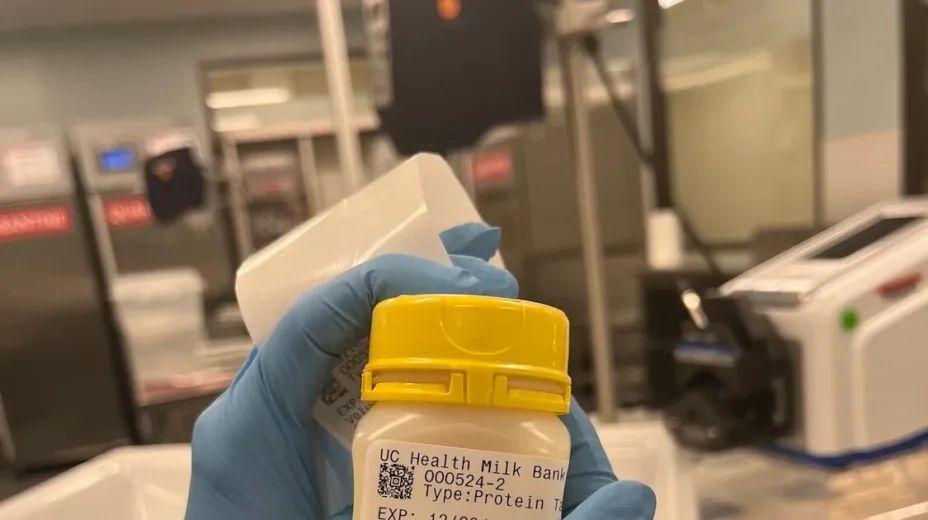
SD’s Institute Leading the Way in Breastfeeding Research
A first-of-its-kind scientific collective in San Diego is working to understand the relationship between breast milk and medication.
external-link

The Living Lab: Right at Home
The Living Lab is unlike most research labs. There are no petri dishes, microscopes or any of the usual accoutrements usually associated with laboratories.
external-link

UC Health Milk Bank: Increasing Donor Milk Access in California
The UC Health Milk Bank has received the Top Honor 2023 Quality Leaders Award from the California Association of Public Hospital and Health Systems, and the California Health Care Safety Net Institute.
external-link

UC San Diego Launches New Human Milk Institute
Combining current programs into a single entity, researchers, physicians and educators hope to create a global hub for understanding and accelerating knowledge and application of human milk.
external-link

Why San Diego Is One of the Best Cities for Healthy Aging & Longevity
In labs and clinics and on coastal trails, the city is blending lifestyle and science to redefine how we age.
external-link

Your Breastmilk Can Save a Life…
The University of California Health Milk Bank was established in 2020 to harness the collective strengths of the UC system—its leading human milk researchers and dedicated newborn health experts—to set the national standard in newborn nutrition and milk banking.
external-link
SPEAK UP AND SUPPORT LIFE-CHANGING RESEARCH.
Meaningful impact takes sustained support from individuals, industry and government alike. Learn what fuels breakthroughs and how you can help by staying informed, contacting your representatives and supporting research in the ways that make sense for you.