
Everyday Impact Hub

Empowered Communities
How a Simple Date Change Transformed Local Voting
Across the country, more people are voting in local elections — thanks in part to UC San Diego research. Political scientist Zoltan Hajnal discovered that when cities held elections on odd, off-cycle dates, turnout dropped sharply, leaving decisions to a small, unrepresentative group of voters. His studies showed that aligning local elections with state and national ones boosts participation. Today, dozens of cities have changed their calendars based on his findings — making democracy fairer and more representative for millions of Americans.

Empowered Communities
Keeping Your Data Safer
When you check your email, pay a bill online or shop through an app, your data is protected by algorithms co-created at UC San Diego. Computer scientist Mihir Bellare helped design the code behind secure web connections — the “https” you see in your browser — and the systems that safeguard credit card payments and private messages. His hash-based message authentication code, or HMAC, is used billions of times a day to keep information safe, making online security part of everyday life.

Empowered Communities
The Hidden Research Protecting You on the Road
Driving without disruption? You can thank UC San Diego. Computer scientist Stefan Savage exposed how hackers could remotely take over cars — controlling brakes, engines, even windshield wipers. His research pushed automakers like General Motors to launch cybersecurity teams, convinced federal agencies to create testing labs and spurred new national cybersecurity standards for cars. Today, millions of Americans drive more safely because UC San Diego research made car cybersecurity a priority.

Empowered Communities
The Technology Keeping Californians Safer from Wildfire
When a wildfire sparks, every minute matters. UC San Diego’s ALERTCalifornia system uses more than 1,150 AI-powered cameras and sensors across the state to give firefighters and emergency managers real-time views from mountaintops to city edges — spotting smoke, scaling response, and supporting evacuations before flames spread. The system also helps teams prepare for the next threat, from post-fire flooding to mudslides. Platforms ranging from the evening news to the Watch Duty app use the live cameras to help millions of Californians stay informed and out of harm’s way. What began as campus research is now a statewide safety network — protecting people, property, and peace of mind.

Resilient Earth
Clearing the Air
For decades, everyday products — from home refrigerators to aerosol sprays — were quietly damaging the atmosphere and putting people at risk. UC San Diego scientists helped change that. In the 1970s, Ram Ramanathan discovered that chlorofluorocarbons (CFCs), once common in household items, were powerful greenhouse gases that also ate away at Earth’s protective ozone layer. His work helped lead to the 1987 Montreal Protocol, a global agreement that shields all of us from dangerous UV radiation today. In the 1990s, Mark Thiemens uncovered that nitrous oxide, a once overlooked greenhouse gas, was a by-product of nylon manufacturing. That finding drove new technologies that sharply reduced emissions worldwide. Their discoveries made the air cleaner and safer for billions of people — a quiet, everyday protection we benefit from every time we step outside.

Resilient Earth
Smarter Charging, Thanks to UC San Diego
The next time you plug in your electric car, you might already be benefiting from UC San Diego research. Researchers here discovered that most drivers charge at night — when electricity often comes from fossil fuels — and found ways to incentivize drivers to shift charging to daytime hours, when solar energy is plentiful. Their work is shaping cleaner, cheaper workplace charging across California — showing how small changes can make a big impact for people and the planet.

Resilient Earth
The Biodegradable Shoes on Your Feet
Each year, the world produces 22 billion pairs of shoes, most of which end up in a landfill or, worse, in our oceans. What if, when your shoes wore out, they left nothing behind but a cleaner planet? UC San Diego biologists and chemists joined forces to tackle the global microplastics crisis by creating a new kind of material that breaks down naturally instead of polluting like conventional plastic. After years of research, their work led to the world’s first fully biodegradable shoe, now available through Blueview, a university spinoff company. Nearly 25,000 pairs have been produced thus far. Made from plant-based materials, now being tapped by other brands, these shoes decompose in compost, soil, or even the ocean — proving that sustainability can start from the ground up.

Resilient Earth
The Science Behind Your Walk Score
If you’ve ever checked a neighborhood’s “Walk Score,” you’re seeing the influence of UC San Diego urban planning professor Lawrence Frank. A pioneer of walkability science, Frank revealed how neighborhood design shapes how much people walk, drive and even how healthy they are. His findings not only led to tools like Walk Score but also reshaped city planning across North America — inspiring sidewalks, transit hubs and safer streets that connect people to schools, parks and coffee shops. Thanks to his work, walking isn’t just exercise — it’s part of daily life for millions of Americans.

Resilient Earth
The Science in Your Frying Pan
Baking brownies? Frying an egg? Chances are you’re using canola oil — a kitchen staple made possible by research at UC San Diego. Biologist Marty Yanofsky developed a way to modify canola plants so their seed pods don’t shatter before harvest. That simple change means farmers can grow more food on the same land, protecting the environment while keeping cooking oil affordable. Today, this UC San Diego innovation powers a multibillion-dollar industry and helps put a healthier, reliable ingredient on dinner tables across America.

Resilient Earth
The Weather That Shapes Your Day
When you check the weather before heading out the door, you’re using forecasts powered by teams at UC San Diego’s Scripps Institution of Oceanography, who track atmospheric rivers — the powerful storms that bring big rainfall to the U.S.. Scripps scientists also deploy Argo floats and ocean drifters that send real-time ocean and atmospheric data into global weather models. Together, their work helps predict extreme weather around the world. It’s the unseen science behind everything from planning your morning commute to protecting communities when the next big storm hits.

The Future of Health
A Life-saving Cancer Treatment
Hundreds of thousands of people have been treated for cancer with a drug that traces its roots to UC San Diego labs. Cetuximab, known under its commercial brand Erbitux, is a widely used treatment that prevents colon, head and neck cancer cells from growing and spreading. The basis for this innovation was conceived by UC San Diego biologist Gordon Sato, oncologist John Mendelsohn and their colleagues. In the 1980s, they created a type of protein that mimics the defenses of the human immune system to block cancer cells. Their achievement was the foundation for the commercial drug that was approved in 2004 and continues today as a first-line cancer treatment.

The Future of Health
Helping Hearts Beat Right
Millions of Americans live with atrial fibrillation, a dangerous irregular heartbeat that raises stroke risk. UC San Diego cardiologist and computer scientist Sanjiv Narayan developed mapping software that pinpoints the heart’s hidden trouble spots, making treatment faster and more precise. His breakthrough launched Topera, later acquired by global healthcare company Abbott, and today it helps doctors around the world improve treatment success rates and give patients a better chance at lasting relief.

Transformative Technology
Putting the “Mobile” in Mobile Phones
Ever wonder how we can stream a movie while riding a bus? Engineers at UC San Diego’s Qualcomm Institute pioneered the technology that integrates a moving WiFi signal with cellular networks, using error recovery algorithms and procedures to overcome glitchy wireless connections. Early prototypes were tested on campus buses, then the innovation was refined to support stroke telemedicine and disaster response. Now, the invention keeps us connected everywhere — from emergency care to commuter playlists.

Transformative Technology
The Internet, Switched On at UC San Diego
Back in 1988, UC San Diego research scientist Hans-Werner Braun played a central role in bringing the modern Internet to life. After years of work to make it faster and more reliable, Braun sent a short note to colleagues: the new network was ready for real use. The National Science Foundation later called that moment “the birth of the modern Internet.” From there, the foundation was set for the online life Americans now take for granted — from video calls and banking to shopping and streaming.

Transformative Technology
The UC San Diego tech inside your phone
The smartphone in your hand carries decades of UC San Diego innovation. It began with Irwin Jacobs, who taught here before founding Qualcomm and developing CDMA — the wireless system that made mobile communication possible worldwide. Years later, professor Peter Asbeck created transistors that amplified weak signals without draining battery life, paving the way for smaller, longer-lasting phones. More recently, Alexander Vardy and his colleagues designed algorithms that help 5G networks deliver faster downloads and smoother streaming. Together, their breakthroughs turned early digital research into the smartphones we rely on every day – so every time you make a call, stream a video or send a photo, you’re using technology shaped by generations of UC San Diego engineers.

Transformative Technology
Turning plants into performance wear — and progress
The athleisure you wear for yoga class might have roots in a UC San Diego lab. The nylon used in Lululemon activewear was developed in partnership with Genomatica — a company co-founded by bioengineering professor Bernhard Palsson and alumnus Christopher Shilling. Genomatica uses biotechnology to turn plants into the building blocks for nylon, replacing materials traditionally made from fossil fuels. It’s proof that sustainable science can look good, feel good and do good for the planet.
Transformative Technology
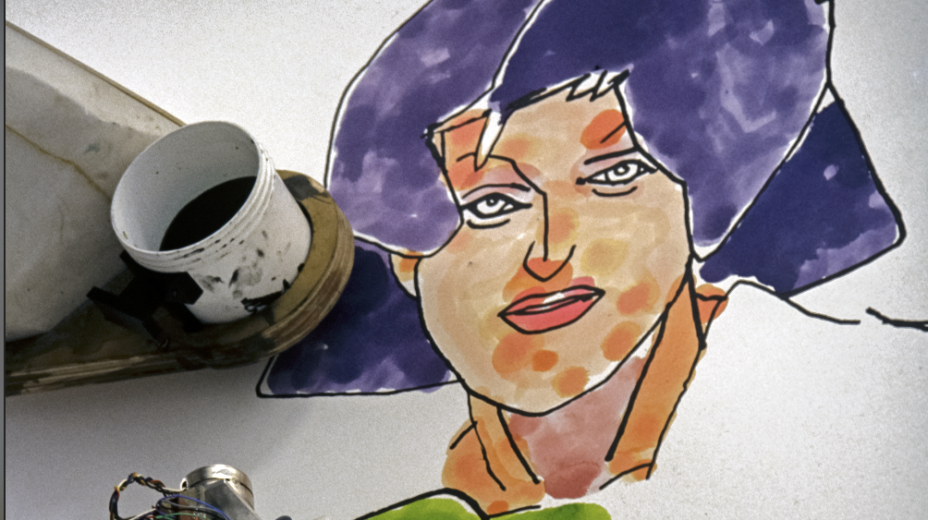
When Art Met Algorithm
The next time you see AI-generated art, you’re seeing the legacy of a UC San Diego pioneer. In the 1970s, Visual Arts professor Harold Cohen built AARON, one of the world’s first programs to create original artwork entirely on its own. Long before AI went mainstream, Cohen showed that computers could be creative partners — a discovery that laid the foundation for today’s explosion of digital and AI-driven art, where code and creativity now inspire each other worldwide.