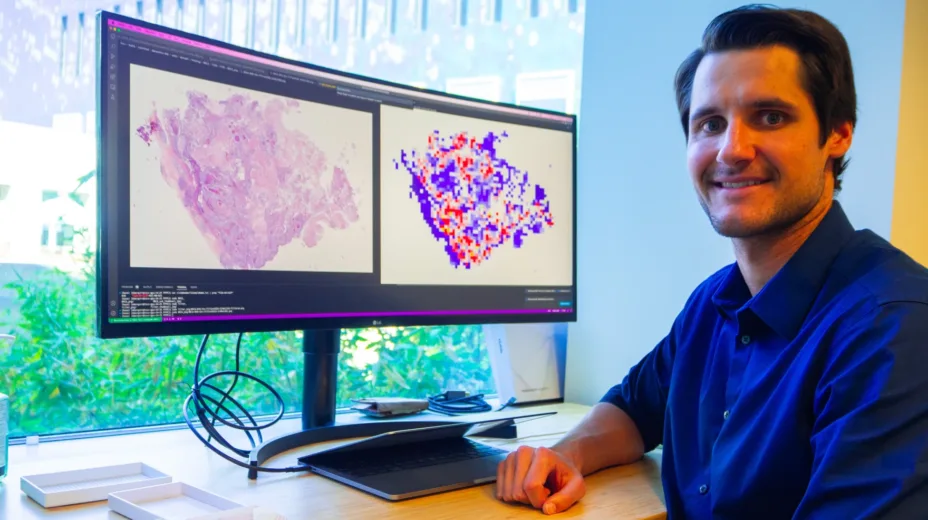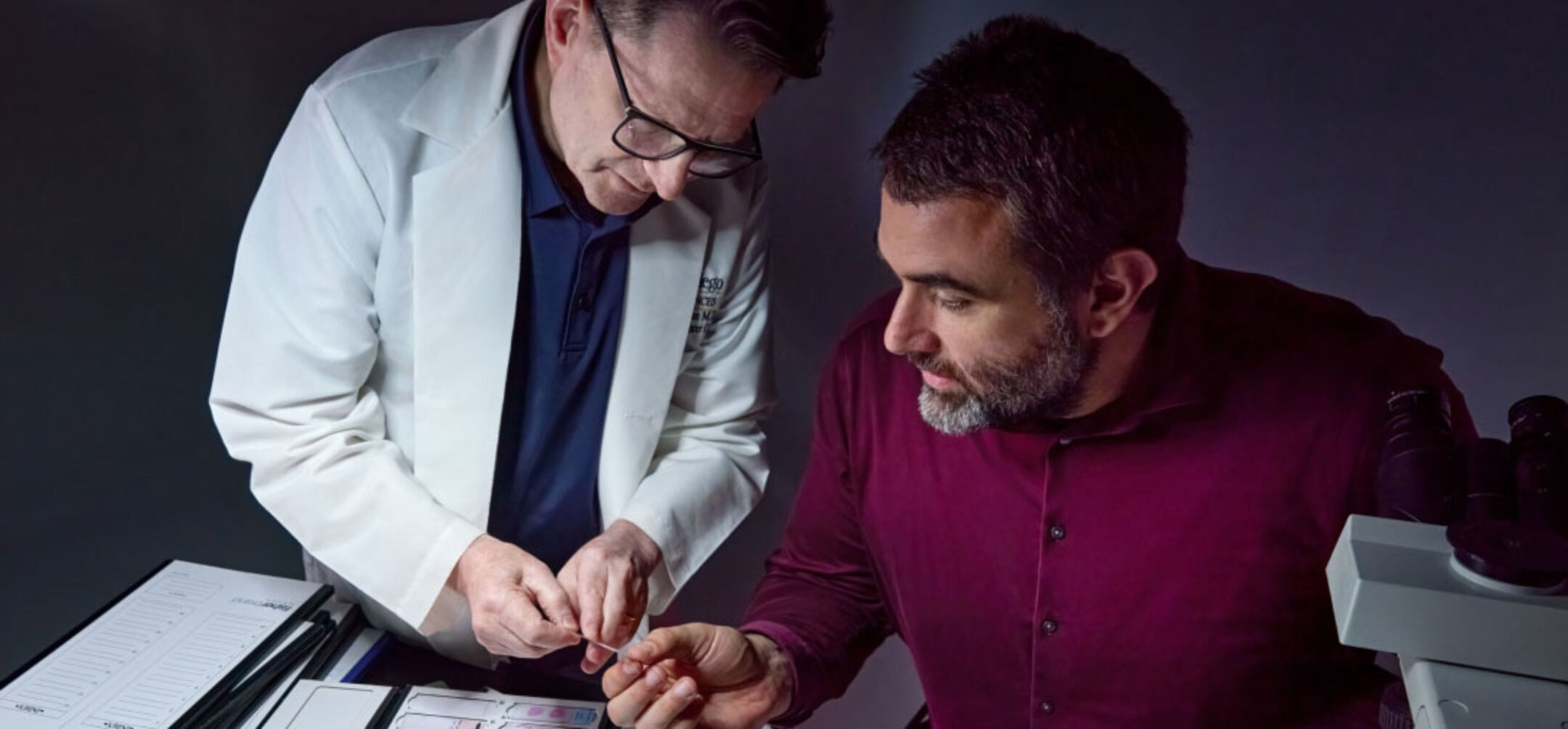
Could artificial intelligence (AI) help cancer patients receive the right treatment more quickly? At UC San Diego, researchers are developing tools that use AI-read biopsies to rapidly identify the best treatment options for certain cancers — getting us closer to a future where precision cancer care is faster, more accurate and more affordable.
Even with advances in precision medicine, cancer patients often face long waits after a biopsy as clinicians depend on genomic tests that can take weeks to return results — and sometimes fail entirely. These delays can be life-threatening, especially when early treatment is critical for survival.
New AI-driven tools at UC San Diego help to close gaps in care and ensure more people receive timely, effective treatment. By shortening the path from diagnosis to action, AI has the potential to ease uncertainty and save lives.
Scientists are designing AI systems that can analyze a standard biopsy slide and deliver actionable insights in minutes, rather than weeks. One tool, developed through a collaboration spanning the School of Medicine, Jacobs School of Engineering and Moores Cancer Center, shows particular promise for breast and ovarian cancer. By accurately detecting key molecular features without the need for traditional genomic sequencing, the system helps clinicians choose the right first-line therapy quickly and with greater confidence. This approach could also reduce the need for repeat testing or invasive re-biopsies, which add cost, delay and stress for patients.
As these tools expand to more cancer types, they represent a major step toward making precision treatment faster and available to more patients.